
Toca Boca Jr Kitchen NETFLIX
Netflix, Inc.Educational
3.654.00 Reviews
- Version
- 1.0.2
- Installs
- 1.00M
- Age Rating
- Everyone
Screenshots

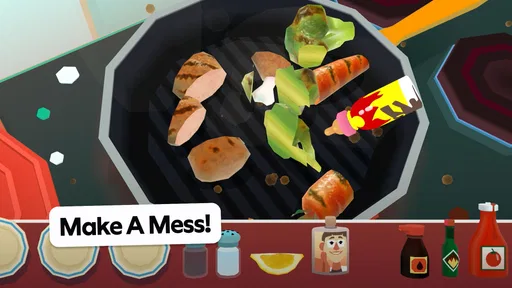
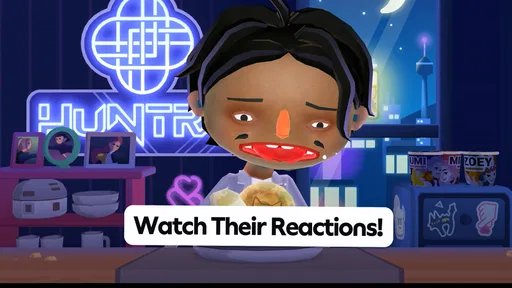

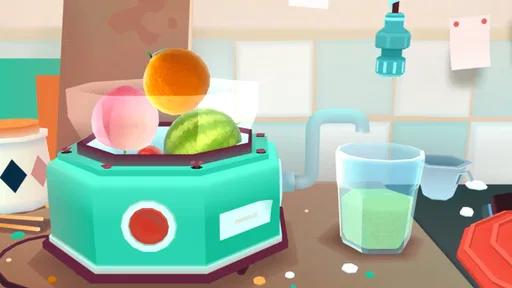


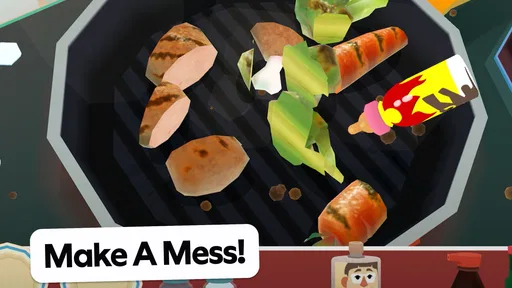
Our Review of Toca Boca Jr Kitchen NETFLIX
 Analysis by Appyee
Cooking games for children usually promise a cheerful way to play, but the real test is whether a child can enjoy them on a shared device without turning the experience into a constant lesson from an adult. I spent time with Toca Boca Jr Kitchen NETFLIX with that question in mind. It is an educational game from Netflix, Inc. built around pretend cooking, and its strongest quality is how naturally it fits short, supervised moments at home.
The idea is simple enough for a young player to understand quickly: enter a playful kitchen, experiment with food, and enjoy the act of preparing something without the pressure of a real recipe. That simplicity is important. A child does not need to read a long explanation before beginning, and an adult can sit nearby without having to manage a complicated ruleset. At the same time, the game is not a replacement for practical cooking instruction. Its value is in imaginative play, sequencing, and conversation rather than accurate kitchen technique.
How it feels on a shared household device
In my experience, the best setting is a tablet or phone that a child can use while a parent, grandparent, or older sibling is close enough to join in. One child can take the lead, while another suggests what to prepare or decides what should happen next. This makes the game useful during a quiet afternoon, while dinner is being prepared, or during a short wait when a full console game would be too demanding.
A realistic household scenario is a parent working in the kitchen while a child plays at the table. The child can explore the pretend kitchen and describe the choices being made, while the adult turns those choices into a small conversation about ingredients, order, and taste. That shared talk is where much of the educational benefit appears. The app creates a reason to ask questions such as why food is prepared in a certain order or what might happen if two ingredients are combined.
It also works for a child who prefers independent play, but I would not treat it as an automatic babysitter. The game is gentle and approachable, yet younger children may still want help understanding an icon, taking turns, or deciding what to do next. A shared device adds another practical issue: if several children use the same phone, they need a clear agreement about whose turn it is. The game itself should not be expected to solve every household dispute.
The most useful way to share it is to make the play session collaborative rather than competitive. Asking one child to choose the ingredients and another to narrate the meal gives both children a role. It also prevents the quickest tapper from taking over. For siblings with different ages, an older child can model the controls without becoming the person who does everything.
What the first session is good at
The opening experience is strongest when the child is allowed to explore rather than being pushed toward a correct answer. That makes the game less intimidating for children who are not yet confident readers or who lose interest when an app feels like a worksheet. The kitchen theme gives familiar context, so even a child who has never used a cooking game can understand the basic invitation to handle food and create something.
That freedom has a trade-off. Children who want explicit goals, scores, levels, or a clear sense of completion may find the experience less motivating than a structured educational game. I see this as a deliberate difference rather than a flaw, but it matters when choosing the app. It is better suited to open-ended pretend play than to parents looking for formal progress through cooking lessons.
The educational category is therefore best understood in a broad, practical sense. The game can encourage planning, observation, language, and imaginative decision-making. It does not turn a child into a cook, and it should not be presented as a substitute for an adult teaching real-world safety around knives, heat, raw ingredients, or hygiene.
Setting expectations before handing over the device
Because this is a free game, it is easy to install and try, but “free” should not be confused with a complete explanation of how the household will use it. I recommend deciding in advance whether the child may play alone, whether the device is shared, and whether the session should end when a real household task begins. Those boundaries are more useful than promising a fixed educational outcome.
The game is available for Everyone, which makes it a natural candidate for younger players, but an age label cannot account for every child’s patience, motor skills, or sensitivity to screen time. A preschool child may need an adult to demonstrate the first interaction. A child who is already comfortable with touch games may move through the early exploration quickly and then need a new challenge supplied by conversation.
On a family device, I would also separate the game’s purpose from the adult’s personal account habits. The developer is Netflix, Inc., and the title is associated with Netflix, so the person responsible for the device should handle installation and any account-related decisions. A child should not be expected to understand household login boundaries or decide which adult account is being used. Keeping that responsibility with the adult makes shared use less confusing.
The current version is 1.0.1, and the game requires Android 10 or later. That makes checking the device before planning a family activity worthwhile. If the household has an older phone or tablet, the child may be disappointed if the game cannot be installed there. This is a small preparation step, but it is exactly the kind of friction that can spoil an otherwise easy shared session.
Coordination matters more than competition
Cooking is naturally cooperative, and the game benefits from that quality. Instead of asking who can finish first, I found it more rewarding to give children different decisions: one chooses what goes into the dish, another decides the order of actions, and an adult asks the players to explain their choices. This turns a touch screen into a prompt for communication.
For a single child, a parent can use the same method without hovering. Let the child lead, then ask an occasional question rather than correcting every choice. “What are you making?” or “What should happen next?” keeps the child thinking while preserving ownership of the play. If the adult constantly supplies the answer, the activity becomes a demonstration instead of exploration.
There is also a useful way to connect the game with real household cooking without pretending that the two are identical. After a short session, an adult might invite the child to wash a fruit, arrange napkins, or identify safe ingredients on the counter. The important boundary is supervision: pretend cooking can introduce vocabulary and sequence, but real kitchen tasks need an adult to choose what is safe.
For siblings, I would use a visible turn-taking routine, such as alternating who starts the session and who chooses the next action. This is not a built-in feature I am attributing to the game; it is a household technique that makes a shared device easier to manage. It works particularly well when one child is more familiar with touch controls and tends to act before the other has a chance.
Where the educational value is real—and where it stops
The most convincing learning opportunity is language. Children can name foods, describe textures, invent a menu, and explain a sequence. That makes the game especially helpful for an adult who wants a low-pressure way to encourage conversation. A child who is reluctant to answer direct questions may talk more freely when the questions are attached to a pretend meal.
There is also room for early planning. Asking a child to decide what should be prepared first encourages them to think in steps, even if the game does not demand a realistic recipe. Younger players can practice choosing and noticing cause and effect. Older children can be challenged to create a theme, such as a meal for a particular character or an imaginary celebration.
Still, parents should keep the learning claim modest. The game does not replace a cookbook, a supervised kitchen activity, or a more systematic educational app. A child who needs spelling practice, number drills, or a curriculum with measurable progression will probably get more from a dedicated learning tool. The kitchen setting makes learning approachable, but it does not automatically make every session academically focused.
Another limitation is that open-ended play can lose its appeal for children who need frequent novelty. If a child asks, “What do I do now?” every few minutes, the adult may need to provide prompts. That is not necessarily a problem, but it means the game’s success depends partly on the child’s preferred play style. It is a better fit for imagination and experimentation than for children who want constant rewards or explicit missions.
Trust, age context, and adult involvement
The Everyone rating makes the game easy to consider for a broad household audience, but trust still comes from how the device is managed. I would introduce it to a younger child in a shared room first, not because the kitchen theme is alarming, but because the adult can see whether the child understands the controls and enjoys the pace. That first observation often tells you more than an age label.
Parents may also wonder whether the game is suitable for independent use. My answer is conditional: it can be, once the child knows how to start playing and the household has agreed on device rules. For a first session, shared play is better. It reveals whether the child needs help and gives the adult a chance to explain that pretend food is different from handling real food.
Account boundaries deserve equal attention. Since this is a Netflix title, adults should keep responsibility for the household account and installation choices. Children can enjoy the game without needing to manage adult credentials. On a shared phone, I would avoid handing over the device while another family member is in the middle of unrelated personal activity. A separate child-friendly device or a clear handoff routine may be preferable when privacy and convenience matter.
The game has reached over 500 thousand installs and holds a 3.9 average from roughly 684 ratings, with 22 written reviews. Those figures suggest that people are trying it, but they should not be treated as a guarantee that every child will respond to its open-ended style. I would pay more attention to the child’s temperament: curious, imaginative players are likely to get more from it than children who need a tightly directed challenge.
How it compares with familiar alternatives
Compared with a recipe app, this game is more welcoming for children who are not ready to read instructions or work with real utensils. It removes heat, mess, timing pressure, and safety risks from the activity. The cost of that convenience is realism. A recipe app can teach an actual sequence and produce something edible; this game is about the fantasy of cooking and the conversations that grow around it.
Compared with a highly structured educational game, it offers less obvious measurement. There is no reason to choose it if your main goal is tracked academic practice or a clear progression of lessons. Its advantage is emotional accessibility: a child can begin with curiosity instead of worrying about getting an answer wrong.
Compared with a competitive multiplayer game, it is calmer and easier to adapt to mixed ages. That makes it a sensible choice for a family that wants siblings to cooperate on one screen. However, children who thrive on competition may find it too quiet. In that case, a game with explicit challenges may hold attention longer, while this one can remain a relaxed alternative for creative play.
One non-obvious strength is how easily an adult can change the level of challenge without changing the software. For a younger child, name the food and let them explore. For an older child, ask them to design a menu, tell a story, or justify the order of preparation. The same kitchen can therefore support different conversations, although the adult supplies much of the extra structure.
Practical ways to get more from a short session
I would begin with a brief, unhurried introduction rather than explaining every possibility. Demonstrate one action, then hand over control. Children often learn the interaction more effectively by trying it than by watching a long tutorial from an adult.
A second useful approach is to give the session a small theme. “Make a breakfast for a sleepy character” or “prepare something colorful” creates direction without turning play into a test. The theme also gives the child a reason to describe decisions, which strengthens the language side of the experience.
For shared use, keep the device positioned where both children can see it and agree on turns before starting. If one child is still learning touch controls, let that child have the first attempt while the more experienced player narrates. This reverses the usual pattern in which the confident child takes over and the beginner becomes a spectator.
Finally, end with a real-world connection that does not require a kitchen hazard. Ask the child to draw the meal, name its ingredients, or help set the table. That gives the session a natural finish and helps distinguish imaginative play from actual food preparation. It is a simple way to make the game feel like part of family time rather than an isolated screen activity.
My household verdict
I recommend Toca Boca Jr Kitchen NETFLIX for families looking for a gentle, child-friendly cooking theme that works particularly well with an adult nearby. Its free price removes the risk of paying before discovering whether the child enjoys it, and the Everyone rating makes it easy to consider for a broad age range. The strongest experience comes from shared conversation, turn-taking, and imaginative prompts rather than from expecting the game to teach formal cooking.
I would skip it if your priority is real recipes, measurable school-style progress, or a highly competitive challenge. I would also think twice before giving it to a child who becomes frustrated when a game does not provide a clear next objective. In those situations, a structured educational title or supervised real-world activity may be a better match.
For the right household, though, this is a pleasant way to turn a shared device into a small creative space. My final view is that its value depends less on how long a child plays and more on what happens around the play: the questions asked, the turns respected, and the boundary kept between pretend cooking and real kitchen safety. Used that way, it earns a place as a relaxed educational game for family moments rather than as a substitute for learning to cook.
Privacy and Permissions
See what permissions an app requests and how it handles your data.
- Other
- view network connections, full network access, prevent device from sleeping, Google Play license check, read Google service configuration
Verdict
Strengths of Toca Boca Jr Kitchen NETFLIX
- Simple controls make cooking accessible for young children.
- Creative recipes encourage experimentation without failure or pressure.
- Bright visuals and friendly characters are appealing to preschoolers.
- Offline play is useful for travel and areas with limited internet.
- Netflix membership generally includes the game without extra purchases.
Limitations of Toca Boca Jr Kitchen NETFLIX
- Requires an active Netflix subscription to access the full game.
- Gameplay may feel repetitive after children discover most recipes.
- Limited challenge can make it less engaging for older children.
- Some devices may experience performance issues or longer loading times.
- Progress and access may depend on the signed-in Netflix profile.
Other Releases by Netflix, Inc.
View All
Netflix
Entertainment4.8

Sonic Mania Plus - NETFLIX
Action4.5

Bloons TD 6 NETFLIX
Strategy4.6

Football Manager 26 Mobile
Sports4.3
Similar Picks in This Category
View All
Little Panda Policeman
BabyBus4.0

Monster Trucks Game for Kids 2
Raz Games4.1

Little Panda's Chinese Recipes
BabyBus4.4

Little Panda's Restaurant
BabyBus4.4

Little Panda's Ice Cream Games
BabyBus4.3

Baby Panda Care
BabyBus3.8
Frequently Asked Questions
What is Toca Boca Jr Kitchen NETFLIX?
Toca Boca Jr Kitchen NETFLIX is a child-friendly cooking and creative play app from the Toca Boca Jr collection, available through Netflix Games for eligible subscribers. It lets children prepare playful dishes, experiment with ingredients, and interact with colorful kitchen tools without strict objectives, timers, or complicated instructions. The experience is designed primarily for open-ended exploration rather than competitive gameplay.
Is a Netflix subscription required to play Toca Boca Jr Kitchen NETFLIX?
Yes, access generally requires an active Netflix membership and a compatible Android or iOS device. The game is included with supported Netflix plans, so it does not normally use separate in-game purchases or display third-party advertising. Availability can vary by country, account type, device model, and operating-system version, so users should check the Netflix app or the relevant app store before downloading.
Is Toca Boca Jr Kitchen NETFLIX suitable for young children?
The app is designed with young children in mind and uses simple controls, bright visuals, friendly characters, and an open-ended structure. Children can tap, drag, combine, and serve food with minimal reading or gaming experience. Parents should still review the game first, especially for very young users, and configure device restrictions because Netflix access and general screen time remain the responsibility of the adult.
Does the game include ads, purchases, or online multiplayer?
Toca Boca Jr Kitchen NETFLIX is intended to provide a contained play experience without traditional third-party advertising or distracting purchase prompts inside the game. It is primarily a solo activity focused on imaginative cooking and experimentation rather than online multiplayer competition. Because it is distributed through Netflix, account and download requirements may still apply, and some features can depend on the platform or region.
Can Toca Boca Jr Kitchen NETFLIX be played offline?
The game may be playable offline after it has been downloaded and properly activated through the Netflix app, although the exact behavior can depend on the device, account status, and Netflix requirements. An internet connection is usually needed for the initial download and occasional account verification. Parents should test offline access before travel and keep enough storage available for the game and related Netflix data.
Play our best games!


